







Ergonomic furniture is sometimes sold as a premium upgrade to the workplace, a comfort feature rather than a performance one. That is not supported by the occupational health data. In Australia, where the knowledge-based industries represent a large share of employment, and where office workers spend the working day largely seated, poorly designed workstations directly cause musculoskeletal disorders, fatigue, absenteeism, and reduced output. We can quantify the relationship between the physical environment and work performance. Ergonomic furniture is a preventive investment rather than an aesthetic one.
Musculoskeletal Disorders Are Where the Productivity Loss Starts
Musculoskeletal disorders (MSDs) are some of the most prevalent work-related health problems worldwide, and their economic impact is significant. MSDs are responsible for about 40 per cent of compensation costs in developed countries. Neck, shoulder, wrist, and lower-back pain are all common complaints among office workers. These can all be alleviated by using ergonomic chairs, height-adjustable desks, monitor arms, and properly designing the workstation to encourage neutral body postures that minimise physical stress during the workday.
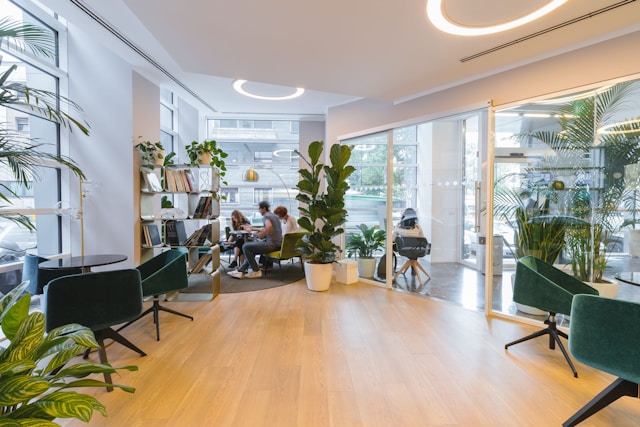
The research supports that when ergonomic interventions are implemented, discomfort-related complaints decrease, resulting in fewer hours lost to injury-related absences. This translates directly into increased sustained output. This understanding is reflected in modern office layouts that bring ergonomic workstations together with collaborative areas and lounges to facilitate both focused individual work and the kind of informal interaction that physical comfort enables. The overall design of the environment is important, but it begins with what each individual is sitting in for seven hours.
Physical Discomfort Does Not Stay Physical
The relationship between physical discomfort and cognitive performance is a clear and established one. Employees suffering from back pain, neck stiffness, or repetitive strain injuries often take time away from work to manage that discomfort, moving position, stretching, or simply being unable to focus for long periods of time while in pain. These are interruptions that build over the course of the day. A study on office productivity showed that workers who used ergonomically optimised workstations were more focused and less fatigued than workers who used conventional furniture because the physical distractions that fragment attention were not occurring with the same frequency.
That discovery has a practical implication beyond comfort. The cognitive work that drives value in knowledge-based work, analytical thinking, problem-solving, and decision-making, takes sustained focus, and physical discomfort is a reliable debilitator. An employee who is hurting in her lower back by mid-morning is not doing the same cognitive work as one who is not. It’s not a dramatic difference in any one hour. Multiplied over days, weeks, and an entire workforce, it becomes a significant, and preventable, loss of productivity.
Adjustability Is What Makes Ergonomic Furniture Work Across A Workforce
Static furniture fails because it is designed around an average body that most people do not have. Ergonomic furniture addresses this with adjustability. The height of the seat, the lumbar support, the position of the desk, and the placement of the monitor can all be adjusted to individual proportions and working styles. An Applied Ergonomics study of ergonomically configured workstations found that they reduced postural risks while maintaining high productivity levels during computer-intensive work. Adjustable workstations also promote movement throughout the day, reducing the static loading that builds fatigue and leads to dips in performance throughout the afternoon.

The Financial Case Is Stronger Than the Upfront Cost Suggests
Industrialised economies spend 1% of gross national product on direct and indirect costs of work-related musculoskeletal disorders. For Australian employers, this translates to workers’ compensation claims, health costs, absenteeism, and the hidden cost of reduced performance for employees at work who are in pain. In that context, a few hundred dollars for an ergonomic office chair has a very different sound. The initial purchase price is very real. It is minuscule compared to the cumulative costs created by workstations that slowly and chronically injure workers over many years of daily use.
Design also matters in the workplace. For example, studies in occupational health repeatedly show that employees who feel physically supported report greater job satisfaction and engagement, and engaged employees show more discretionary effort, better attention to detail, and lower turnover. When a skilled employee leaves, they must be replaced. The recruitment, onboarding, and training costs are often in the thousands of AUD per person. Ergonomic furniture reduces the physical factors that contribute to disengagement and exit. Ergonomic furniture is both a retention tool and a health investment. It is also a productivity investment that pays dividends on multiple lines at the same time.