





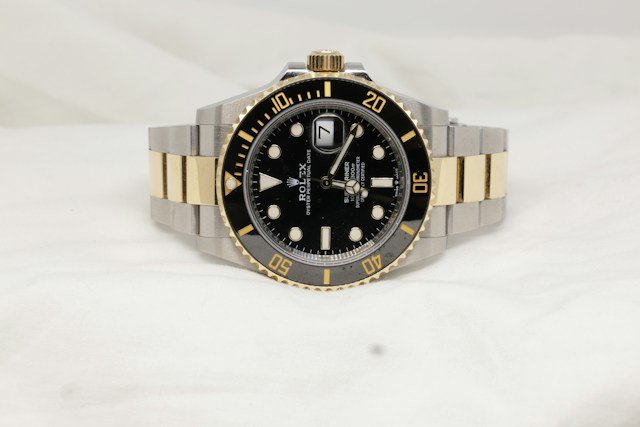
A lot of Rolex owners expect that their watches will increase in value over time. Nevertheless, the resale value cannot always correspond to such expectations, and acting upon them might be quite damaging. People who plan to buy a Rolex watch for reselling should understand the way it is valued by its potential purchasers. Moreover, the problem of taxes cannot be ignored before making a decision to buy a watch.
Why Is the Retail Price Not the Same as Resale Value?
The retail price reflects the initial cost of the watch at the moment of purchase. The resale value depends on the current demand for this specific reference at the time when the item is being sold. There are Rolex references that may be resold at a higher price than their retail price for some period of time and vice versa.
Valuing a Second-Hand Rolex: Condition, Originality and Full Documents
When buying a used Rolex, potential buyers have a close look before deciding what to pay. Normal scratches and wear are usually okay when you buy sell Rolex watch, but deep scratches, messed-up crystals, far too much polishing, re-done dials and replacement hands can knock the resale value back a peg. Key to keeping resale value high is that the watch still has all its original parts; that way you can be pretty certain it’s still in factory condition.
When valuing a watch, four key factors come into play:
- Condition: When has it been clobbered about and what’s the state of that case and bracelet?
- Originality: Are those hands, that bezel and that dial the ones that came as standard?
- Completeness: What’s the state of the original box, papers and spares like bracelet links?
- Service history: Any maintenance records that show the watch has been serviced and fixed?
If a watch comes without its original box or papers, you can still flog it, though not being able to prove its authenticity probably makes it worth less. It’s also worth remembering that too much polishing can take away some of that sharpness that collectors are so fond of.
Vintage, Neo-Vintage and Modern Rolex Watches: What Makes Them Tick?
Vintage Rolex watches tend to attract buyers who just love the quirky, aged look of a well-loved watch and are happy to see some natural wear and tear. In this world, changing a part can actually reduce the value of the watch more than a few scratches would; it’s just one of those unwritten rules. Modern watches, on the other hand, are in a different league because buyers can compare them with brand-new ones you can buy from dealers.
If your watch is neo-vintage, it falls somewhere in between, at the crossroads of a love of condition and the unique character of those older designs. Dial colour and finish can also influence demand, with some colours being a lot more sought after than others. And it’s not just age that determines value; a newer watch that has been well looked after can be worth more than an older one in pretty poor nick.
When Selling an Inherited Rolex You No Longer Want?
It can be tough to part with an inherited Rolex, especially if it holds some sentimental value. But at the end of the day, when selling, it’s all about what the buyer is willing to pay. So, do you have all the documents to prove it’s the genuine article? Family records, photos and the original receipt can all go a long way to establishing that it is indeed what it says on the box.
But don’t stress if you don’t have the original receipt; many dealers are used to working with watches that have been in family hands for a while and are happy to consider them as long as they can prove authenticity.
Capital Gains Tax on Selling a Rolex: The Australian Situation
If you sell a Rolex for more than you paid for it, you may have to pay capital gains tax. The Taxation Office is very strict about this, and has even got a special category for jewellery. Watches aren’t specifically listed, but jewellery can count as a collectible, which may not be what you think.
There are different rules for different types of assets. Collectables aren’t taxed if the original purchase price was below $500; however, personal use assets have a threshold of $10,000. This is not about how much you end up selling the asset for, but how much you originally paid for it.
Let’s say you bought a watch for $9,000 and later sold it for $20,000. If it falls into the personal use assets category, you don’t have to pay capital gains tax. But if it gets classed as a collectible, you do have to pay tax.
Why Is It Good to Have Several Valuations of Your Watch?
The valuation from one dealer will not determine the market value of your watch. Having two or three different valuations will give you a better idea of the approximate price of your timepiece. It is also important for the seller to listen carefully to the explanation of the price given by each bidder.
Online and on-the-spot valuation is convenient; however, the physical assessment of the watch decides its final price.
The condition of the watch, market demands, and the paperwork required will affect the end result of the Rolex deal.